
In every animation movie you will see notable characters like Pokemon, Dory and Spongebob. Those characters are usually a combination of a human, a monster, a thing or an animal. In this assignment you will create your own animation character. First we start with a research.
Different ways of sketching
- Your teacher will hand out an A5 paper. You need to fold this paper in exactly three equal parts. In the upper part you will draw a head. When you’re finished fold the paper and give it to your neighbour. Pay attention: Watch out that your neighbour can’t see your drawing. Your neighbour starts with the body, etc.
When the drawing is finished, colour it in and paste it into your art portfolio.
- Draw on a blank page of your Art Portfolio three random doodles. Look for the spots, turn around your black book and use your fantasy (imagination) Try to make three lovely coloured characters from the spots, see the example underneath.
- In animation movies everything is possible. Things that in real life can’t move will be alive in an animation movie. For example a talking broom or a walking table. Things can get the quality of people: personification Look in a magazine and find one picture of a nice, simple and recognizable object. Draw the object on the dazzle-light or against the window. Change the object now into a coloured animation character.
- Make a free sketch. You are free to draw a character that you’ve imagined. This character needs to be coloured in.

Image 1: Several examples of assignment 1a
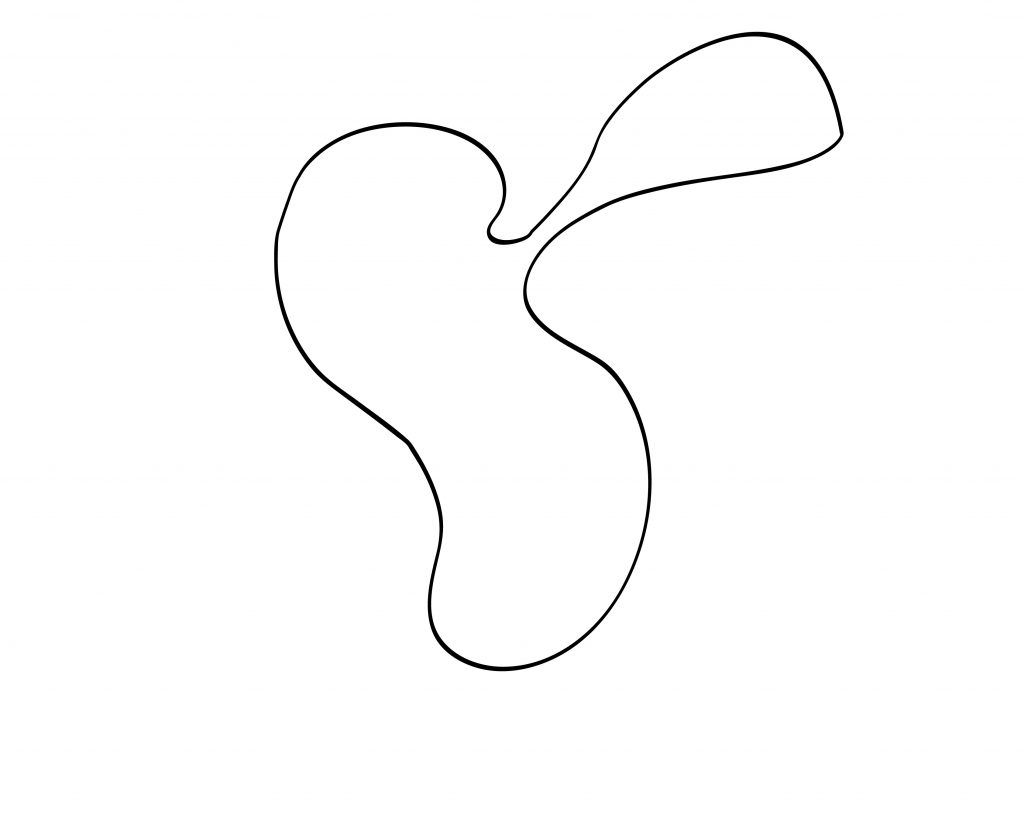

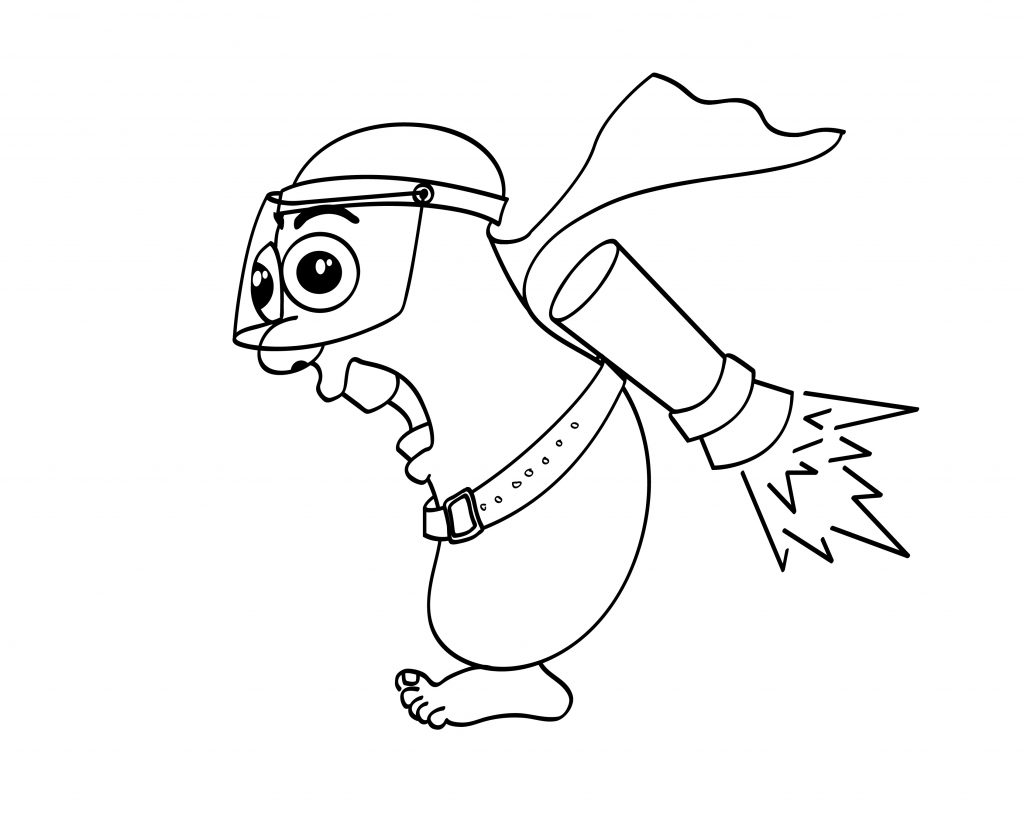

Photo album 1: From stain to animated character


Photo album 2: Examples of personification?
The X-factor
You've discovered four different ways of designing a character. Later on in this assignment you'll pick one of these designs to create it out of clay. But which character is the best? Which one has the X-factor? Character designers use several tricks which give them quick and satisfying results.
Personalities and emotions
To make animated characters interesting, designers usually provide a distinctive character trait or emotion. You can then see at a glance whether the figure is, for example, cheerful, common, lethargic or sad. Not only the face but also the body language plays a major role.
Dynamic or static posture
Most of the time you will see an animation character standing in a dynamic posture. It looks like there is movement. This way it is much nicer to look at it. The opposite of dynamic is static. Then it will look like your character is standing still, there is no movement. The character you will create needs to have a dynamic posture.
Core shadow
By using gradients it is possible to make objects look 3-dimensional. In this case, shadow occurs within the shape itself. This is what we call 'core shadow'.

Image 2: Still from the Klokhuis episode about character designer
The ancient Greeks
As already mentioned, your character will get better by giving it a dynamic posture and a clear emotion. Characters without emotion and a static posture are likely to become dull and lifeless. It were the ancient Greeks who'd already discovered this thousands of years ago.
Ancient Greek sculpturing can be parted into different periods. The main three were the archaic period, the classical period, and the hellenistic period. By comparing statues from these periods, it'll be clear that the ancient Greeks discovered step by step how to make a sculpture interesting. The Greek approach of designing their statues, can be compared with our way of designing animation characters nowadays.
The Archaic period
During the Archaic period (approx. 700 BC) you can see that they did not have much knowledge about the human body. The waist of the statues is often a bit too low, which makes it look like they have too long a back. The persons are almost always depicted in the same way; the arms close to the body and the left leg slightly forward. Furthermore, the statues from this period can be recognized by the "archaic smile", which is very similar to that of Leonardo Da Vinci's Mona Lisa.
The Classic period
You can see very well that the Greeks got more and more understanding of anatomy. There is much more detail in the sculptures. The artists can portray the body more realistically. This can be seen, for example, in the folds in clothing. The figures are not only depicted frontally, but there is more dynamics in the images. The archaic smile has disappeared, the people often look stern and are emotionless.
De hellenistische periode
About 330 BC. the Hellenistic period begins. During Hellenism, you can see that the artists learned a lot over time. The pleats in the clothing and the intricate poses show that the sculptors were true virtuosos. It was a challenge for the artists to portray the people as difficult as possible. The images from this time contain an extremely high amount of dynamism. The figures also have a very clear emotion.

Image 3: Example of sculpture from the Archaic perioc

Image 4: Example of sculpture from the Classic period
Image 5: Example of sculpture from the Hellenistic period
Adding identity
In the assignments 1a-d you have created different sketches. Look at them and choose (with your teacher) the best figure. You need this figure for the final assignment. Answer the following questions and write them down in your black book.
- Why did you choose this character. What makes it interesting? Explain why.
- Imagine your character in a real animation film. What is the setting? How does your character walk, talk, laugh, etc. What does he/she do for actions in the film?
- In what kind of surrounding does your character live? Could this be seen by looking at the character only? If so, how?
- Come up with a creative name for your character.
Variations (vwo assignment)
Professional designers always make several sketches of the same design. That’s the way they can see if the figure can be improved. In this assignment we will do this too. Take an empty page into your black book and divide it into four areas.
- Draw a variation by changing its pose. Pay attention: it needs to be a dynamic posture.
- Draw a variation by changing its emotion. Pay attention: The emotions needs to be clearly visible.
- Change some clothing and/or give your character an attribute.
- Look at the three sketches and add the best things together in the final sketch. Colour this sketch.
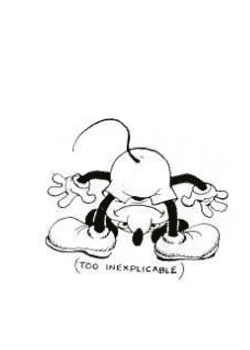

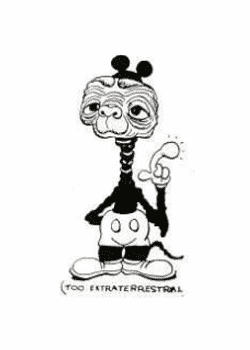

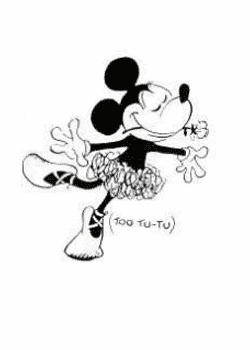

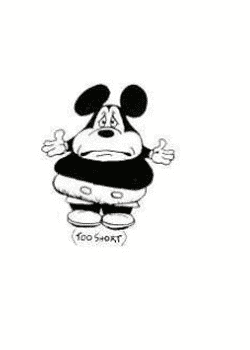
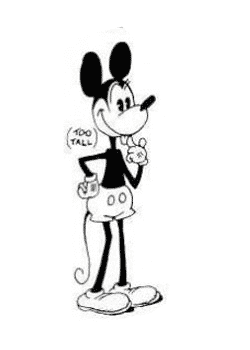
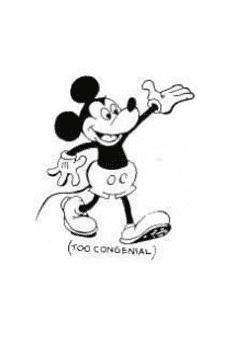
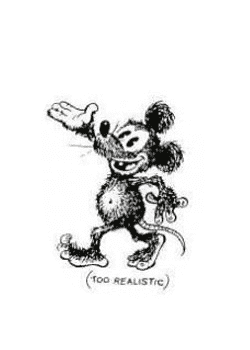

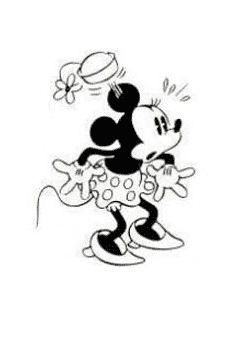
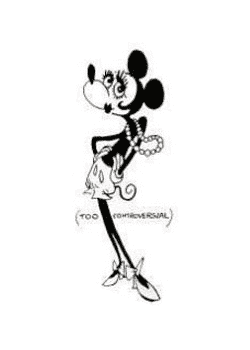
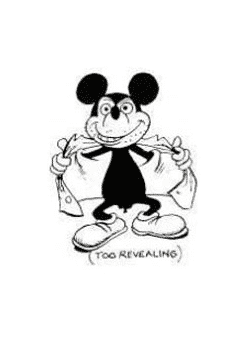
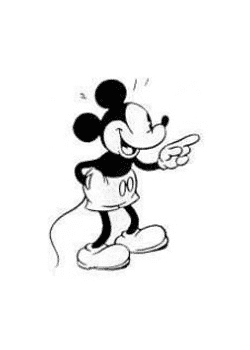
Fotoalbum 3: Verschillende variaties op Mickey Mouse
Animation character
- Make your chosen character with clay.
- After your animation character has been baked, you're going to paint it. After the paint has dried, you'll finish it by adding a thin layer of varnish.
Assessment criteria
- Your character is original
- Your character is 3-dimensional
- Your character has a clear emotion
- Your character has a dynamic posture
- You have applied the clay in technically right way
- The used colours match with the character/emotion of your figure
- You've only used mixed colours made by yourself
- You worked neatly